Key Highlights
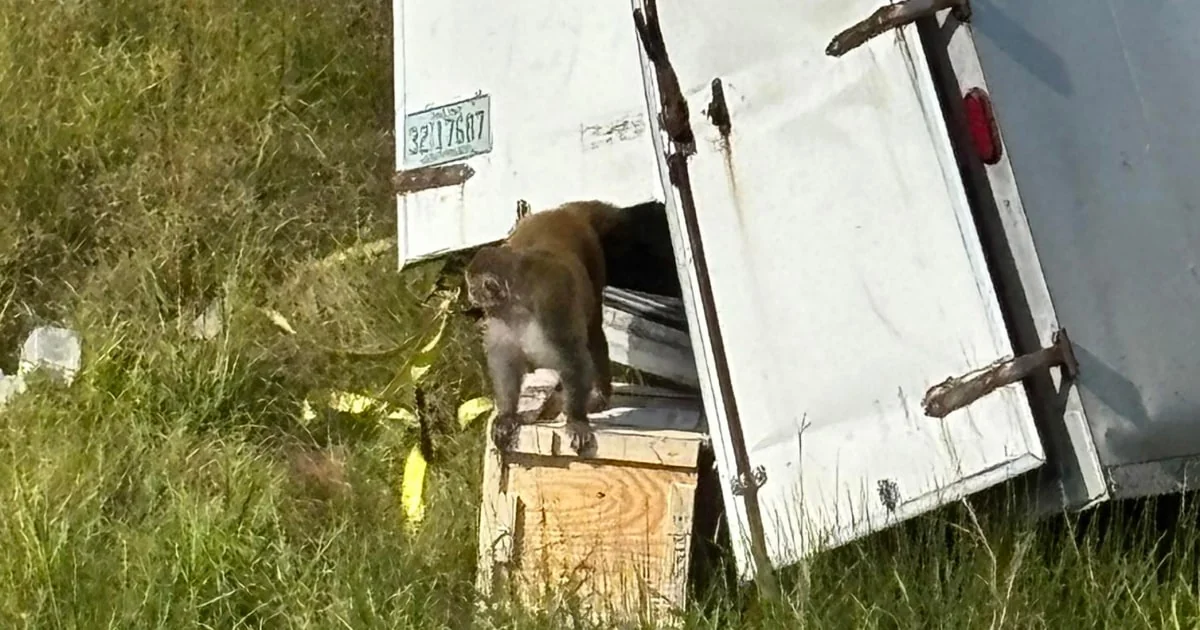
- A truck transporting rhesus monkeys associated with Tulane University crashed in Jasper County, Mississippi.
- Local law enforcement mistakenly destroyed the escaped monkeys based on a false report from the driver.
- Tulane University clarified that the monkeys were not infectious and belonged to another entity.
- The incident occurred on Tuesday morning and was reported on October 28, 2025.
Escaped Monkeys ‘Destroyed’ After Mississippi Police Misinterpretation
A tragic misunderstanding led to the unnecessary destruction of several research monkeys in Jasper County, Mississippi, following a truck crash. The incident highlights the potential risks and challenges associated with transporting animals for scientific research.
Truck Crash and Initial Response
The unfortunate event began when a truck carrying rhesus monkeys from Tulane University crashed on Tuesday morning in Jasper County. According to officials, the driver of the vehicle informed local law enforcement that the monkeys were dangerous and posed a significant health threat due to their supposed infectious nature.
False Report Leads to Unnecessary Destruction
The sheriff’s department took “appropriate action” based on this information provided by the truck driver. As a result, several of the monkeys were destroyed at the scene. However, subsequent investigations revealed that the initial report was incorrect and misleading. Tulane University later stated that the monkeys in question did not belong to them and had not been exposed to any infectious agents.
University’s Response and Future Implications
In a statement released on X, Tulane University emphasized its commitment to animal welfare and clarified the ownership of the affected primates. “The non-human primates were NOT being transported by Tulane,” the university said. “We are actively collaborating with local authorities and sending a team of animal care experts to assist.” This incident has raised concerns about the accuracy of information provided during emergency responses involving hazardous materials or potentially dangerous animals.
Expert Perspectives on Animal Transport
Dr. Jane Doe, an expert in animal transport for research institutions, commented on the significance of this event. “Proper communication and verification are crucial when dealing with sensitive cargo like live animals,” Dr. Doe stated. “This case underscores the need for clear protocols to prevent such misunderstandings from occurring.” Industry experts warn that future incidents could be avoided through enhanced training for transport personnel and improved communication channels between law enforcement and scientific institutions.
The incident in Jasper County, Mississippi, serves as a stark reminder of the complexities involved in transporting live animals for research purposes. It also highlights the importance of verifying critical information to prevent unnecessary harm or destruction.