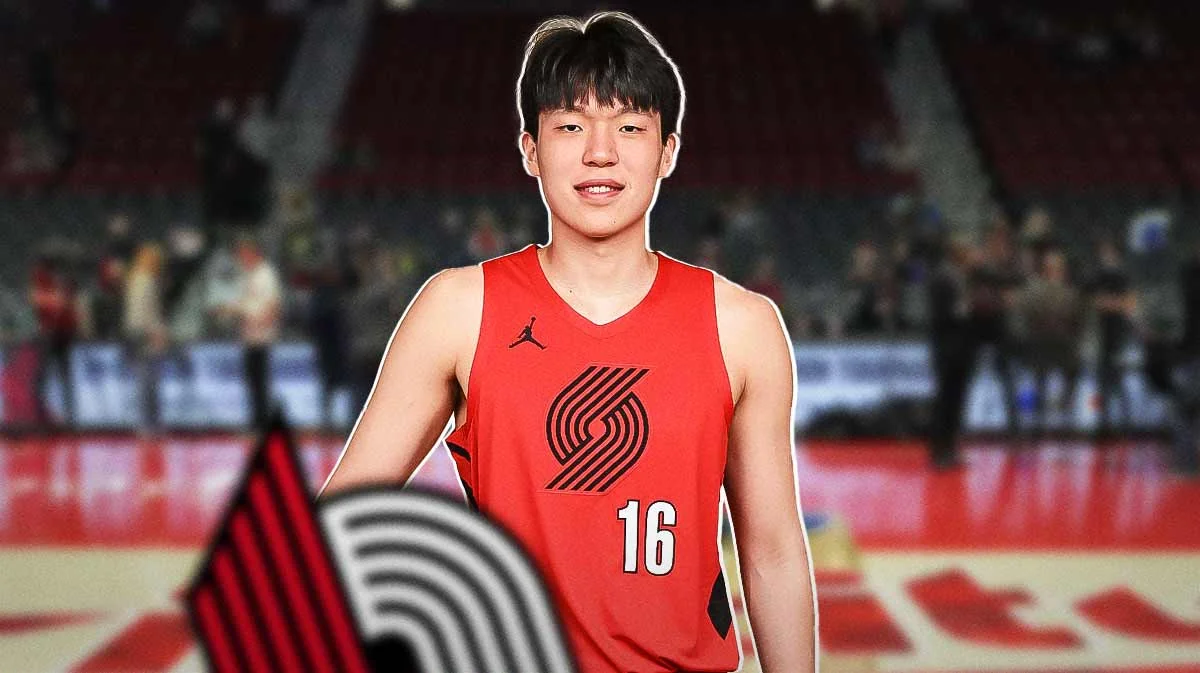
Key Highlights
- The Houston Rockets’ double-big lineup proved ineffective against the Oklahoma City Thunder.
- This raises concerns for the Portland Trail Blazers, who have invested in two centers, including Yang Hansen.
- Hansen’s lack of mobility and defensive abilities are primary concerns according to draft experts.
- The Blazers’ frontcourt challenges could limit Hansen’s immediate role and development.
Blazers Face Reality Check Before Hansen’s Debut
The Portland Trail Blazers, who have recently invested in two centers through the first round of the draft, are facing a significant challenge. The recent performance of the Houston Rockets’ double-big lineup against the Oklahoma City Thunder highlighted the potential weaknesses of such formations, raising concerns for the Blazers as they prepare to integrate their new center, Yang Hansen. The Rockets’ lineup, featuring Alperen Sengun and Steven Adams, struggled in a 2OT loss to the Thunder.
While Sengun showcased impressive offensive skills, Adams’s inability to effectively protect the rim during fatigue became a critical factor. This scenario underscores the importance of mobility and flexibility within big-man lineups, which is where the Blazers may struggle.
Double-Big Lineup Challenges
The Rockets’ double-big experiment was hampered by the physical limitations of Steven Adams. During the game, Adams’s lack of lateral movement became evident during a 7.5-minute stretch in the third quarter when he struggled to rotate and protect the rim. This issue highlighted the need for centers who can effectively guard perimeter players and maintain defensive presence.
For the Blazers, this scenario is particularly concerning as Yang Hansen has been criticized for his lack of mobility and explosiveness by draft experts. Sam Vecenie of The Athletic ranked Hansen 48th on his big board, noting that high-hipped frame, lack of explosiveness, and lateral movement are significant concerns. These traits may make it challenging for Hansen to adapt to the modern NBA where perimeter defense is crucial.
Blazers’ Frontcourt Dynamics
The Blazers’ frontcourt already features Donovan Clingan, who has improved his conditioning but remains a work-in-progress. The addition of Hansen could limit their ability to share court time effectively if Clingan can’t play 30-plus minutes per night. This potential lack of shared court time may hinder both players’ development and prevent Hansen from reaching his high ceiling.
The Blazers are walking a fine line, hoping that Hansen’s unique combination of size and passing skills will allow him to contribute immediately despite the concerns about his physical attributes. However, given the crowded frontcourt, it is crucial for Hansen to find a role that aligns with the team’s needs while also allowing him to develop his game.
Expert Perspectives
Boban Marjanović, a veteran center who has faced similar challenges in his career, offered some insights. “Yang has several intriguing skills,” Marjanović said. “But it’s going to be hard for Yang to actualize those things in the NBA because of his high-hipped frame and lack of explosiveness.”
These comments underscore the reality that Hansen will face significant hurdles as he adjusts to the league. The Blazers need to carefully manage Hansen’s role to ensure he can contribute while also addressing the concerns raised by experts.
Conclusion
As the Portland Trail Blazers prepare for the 2025-26 NBA season, they must confront a harsh reality check: Yang Hansen’s ability to fit into the modern NBA may be more challenging than initially anticipated. The success of his debut and future development will depend on how effectively he can address the physical limitations that experts have highlighted. For now, the Blazers are left to wonder if their investment in Hansen was well-placed or if they need to rethink their frontcourt strategy.