Key Highlights
- Bitcoin has slipped below key cost-basis models, indicating heightened investor stress.
- The market shows a shift towards risk-off positioning with rising implied volatility and put options demand.
- US Spot ETF flows remain negative, reflecting weak demand from traditional financial allocators.
- Futures open interest continues to decline, signaling reduced speculative activity in the derivatives market.
The State of Bitcoin: Below Key Cost-Basis Models and Market Structure
Bitcoin has recently slipped below its earlier consolidation range, marking a new local low and pulling its year-to-date performance into negative territory. This movement has significant implications for market structure and investor sentiment.
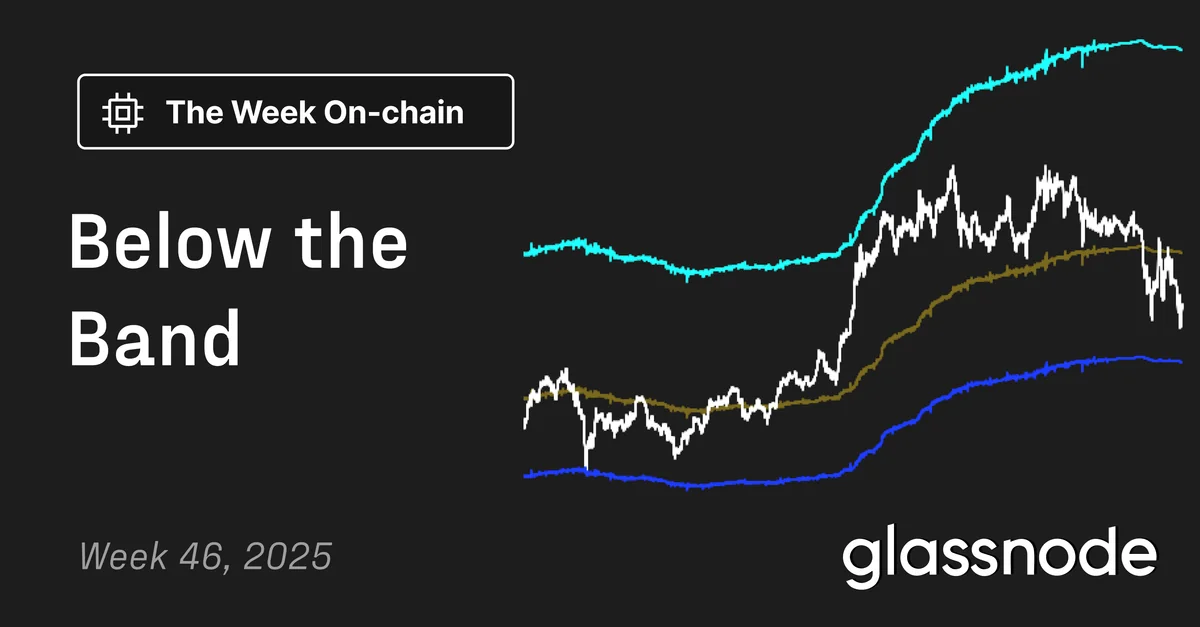
Breaking the lower band of the short-term holder cost-basis model at $97K, Bitcoin’s price plunged to as low as $89K, forming a new local low beyond the –1 STD level (~$95.4K). This breakdown confirms that losses now dominate nearly all recent investor cohorts and suggests a heightened risk of panic selling.
Market Structure and Investor Behavior
The weakening market structure is reflected in various on-chain metrics, including spot demand, ETF flows, and futures positioning. Spot demand remains weak with US spot ETF flows deeply negative. This indicates that traditional financial allocators are not adding incremental bid to the market.
Speculative leverage continues to unwind as evidenced by declining futures open interest. Funding rates across the top 500 assets have fallen to cycle lows, further signaling a risk-off stance among market participants.
Risk Appetite and Options Market
The options market is highlighting increasing demand for downside protection. Implied volatility has risen sharply after Bitcoin’s price broke below $90K, with the front end of the curve reacting the most. The 25-delta skew remains negative across maturities, indicating a bearish sentiment.
Traders are buying significantly more put options than call options, reflecting a defensive positioning regime. The demand for downside protection is particularly strong at key strike prices like $90K, showing that traders are willing to pay high premiums to secure protection against further weakness.
The Future of Bitcoin’s Market Dynamics
These dynamics suggest that the market is currently in a phase where it is searching for stability. The path forward depends on whether demand can re-emerge around key cost-basis levels or if current fragility gives way to a deeper corrective phase or bear market.
The next event that could shift this volatility regime is the Federal Open Market Committee (FOMC) meeting in three weeks. Until then, the options market continues to signal caution and a clear preference for protection.
The DVOL index has climbed back toward monthly highs, reflecting traders’ expectations of larger price swings ahead.
Overall, Bitcoin’s current state reflects a challenging market phase defined by weakening speculative demand, retreating retail interest, and a decisive shift towards risk-off positioning across derivatives. This environment underscores the need for careful investment decision-making in light of ongoing uncertainty.
Disclaimer
This report does not provide any investment advice. All data is provided for informational and educational purposes only. No investment decision shall be based on the information provided here, and you are solely responsible for your own investment decisions. Exchange balances presented are derived from Glassnode’s comprehensive database of address labels, which are amassed through both officially published exchange information and proprietary clustering algorithms. While we strive to ensure the utmost accuracy in representing exchange balances, it is important to note that these figures might not always encapsulate the entirety of an exchange’s reserves, particularly when exchanges refrain from disclosing their official addresses.