Key Highlights
- Rapid growth in U.S. humanoid robotics investment from $42.6 million in 2020 to nearly $2.8 billion in 2025.
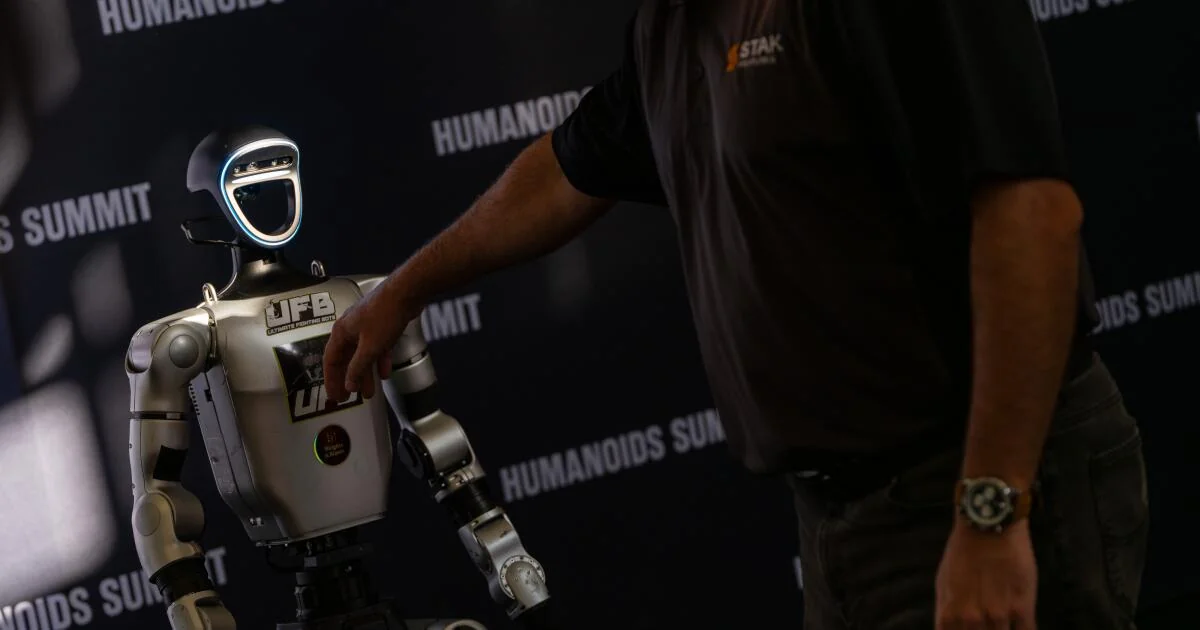
- Robotics companies showcased at the two-day Humanoids Summit in Mountain View, California.
- Investment in California humanoid robotics companies accounted for most of the funding in 2025.
- Companies like Weave Robotics are developing laundry-folding robots with AI capabilities.
- Analysts remain skeptical about consumer and business adoption of humanoid robots despite hype.
The Rise of Humanoid Robots: A Silicon Valley Summit Spotlight
More than 2,000 investors, entrepreneurs, and industry experts gathered in the heart of Silicon Valley for the two-day Humanoids Summit, which took place last week at the Computer History Museum in Mountain View. The event was a testament to the growing interest and investment in humanoid robotics technology.
A Surge in Investment
The summit revealed an unprecedented surge in venture capital funding for U.S.-based humanoid robotics companies, with total investments reaching nearly $2.8 billion by 2025, compared to just $42.6 million in 2020. According to PitchBook data, California’s investment landscape played a crucial role, accounting for the majority of this funding.
Demonstrations and Innovations
The Humanoids Summit featured a wide array of robots showcasing their capabilities. Robots demonstrated everything from laundry-folding to making heart gestures with mechanical hands. One particularly striking demonstration involved a child-like humanoid robot that could speak, highlighting the potential for these machines in education and care.
Industry Perspectives
“By teaming up, humans and robots can solve big problems like making education more accessible, caring for people, and protecting our planet,” said Codey from Mind Children, a Washington-state startup. However, not all analysts share this optimistic view.
Bill Ray of Gartner expressed skepticism, stating that robots are “impractical” with limited functionality and far less clever than their demos suggest. He highlighted concerns about the practicality and utility of these machines in everyday life.
Technological Limitations and Future Projections
While the summit showcased many technical limitations—most robots were still pre-programmed or puppeteered by humans—it also pointed to a projected market growth. By 2050, Morgan Stanley Research estimates that the humanoids market could be worth $5 trillion, potentially surpassing the current size of the auto industry.
The cost of humanoid robots is currently around $200,000 in high-income countries but may fall to as low as $50,000 by 2050. This projected price drop could make these robots more accessible for widespread use.
Real-World Applications
Several companies are already testing humanoid robots in real-world applications. For instance, Weave Robotics, a startup based in San Jose, has placed its laundry-folding robot in laundromats across the country. Evan Wineland and Kaan Dogrusoz, co-founders of Weave Robotics, envision future home robots that can perform general caretaking tasks.
In another demonstration at Sea Breeze Cleaners in San Francisco, a Weave Robotics robot folded shirts slowly but steadily behind a large window. This sight attracted curious onlookers who were fascinated by the technology’s potential to assist in mundane household chores.
The Future of Humanoid Robots
While some view humanoid robots as the future of various industries, others remain skeptical about their practicality and usefulness. The market for these machines is projected to grow significantly over the next few decades, but the journey from today’s demonstrations to widespread adoption will likely be long.
The Humanoids Summit provided a glimpse into the current state of humanoid robotics and its potential future impact on society. As technology continues to advance, the role of these robots in our daily lives remains to be seen.