Key Highlights
- Meteor Crater in Arizona continues to yield new insights into cosmic impacts.
- Competitive grants are supporting field and laboratory research at known or suspected impact sites worldwide.
- Impact craters serve as natural laboratories for studying the effects of extraterrestrial collisions with Earth.
The Eternal Secrets of Meteor Crater
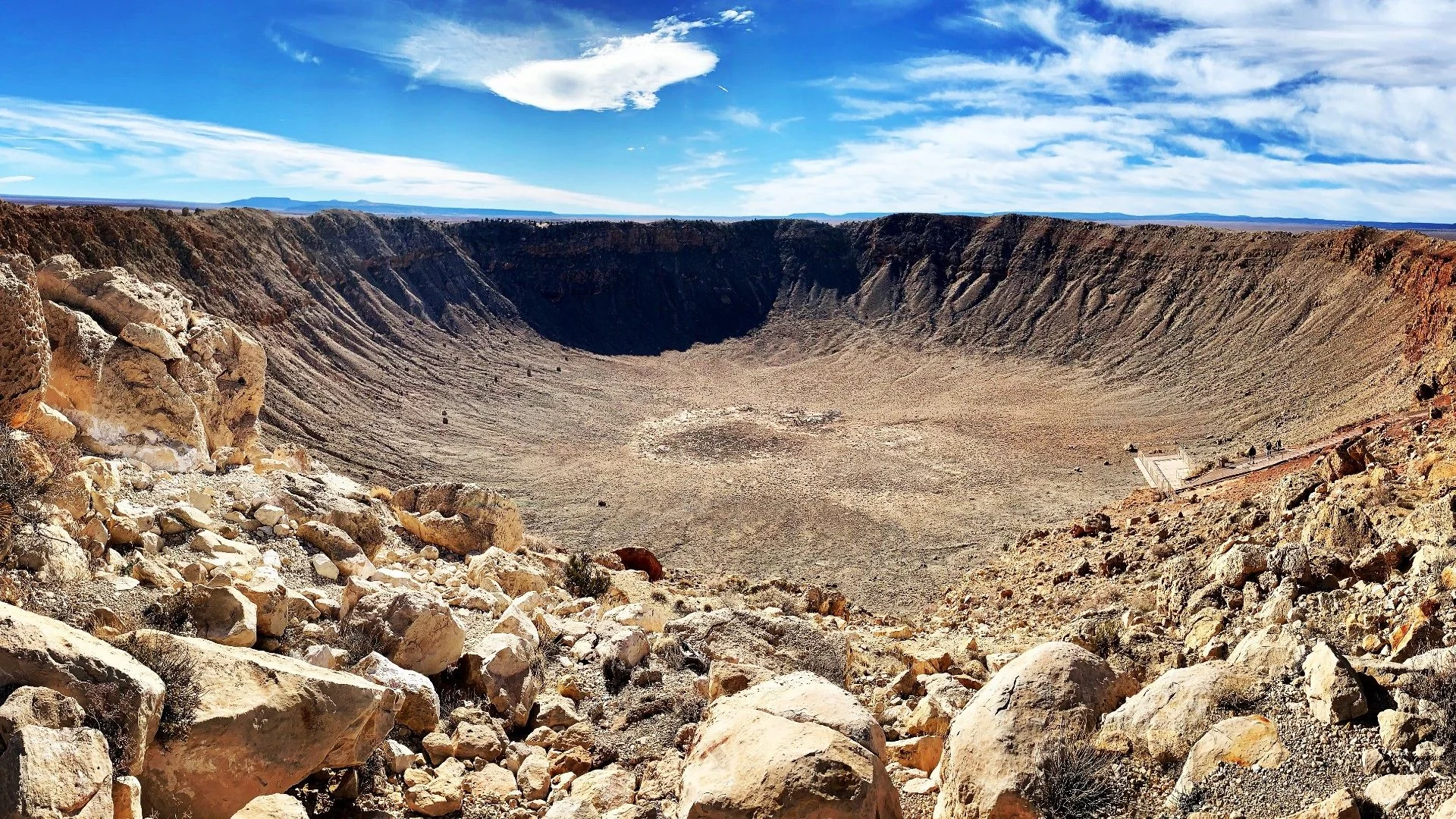
Meteor Crater, nestled in Arizona’s highlands, remains a beacon for scientists eager to unlock the mysteries of cosmic impacts. Despite its age—50,000 years—it still whispers secrets about our planet’s past and future.
A Natural Laboratory
The crater, officially known as Barringer Crater, is the best-preserved meteor impact site on Earth. Its pristine condition allows researchers like Dan Durda from the Southwest Research Institute to conduct cutting-edge studies. “Meteor Crater provides unparalleled insights into how extraterrestrial objects interact with our planet,” Durda asserts.
Christian Koeberl of the University of Vienna further emphasizes its importance, stating that it is one of the first craters recognized as an impact site in the early 20th century. This recognition has sparked a global interest in studying such natural phenomena.
The Value of Grants
To support these endeavors, grants are being offered to students and early career researchers. The Barringer Family Fund administered by The Meteoritical Society encourages interdisciplinary research, blending geology with astronomy. “These studies help us understand the broader implications of impact events on Earth’s history,” Koeberl notes.
Impacts on Our Planet
The importance of studying impact craters extends beyond just scientific curiosity. Koeberl explains that understanding these events can provide insights into geological and biological evolution, with significant impacts like the extinction of dinosaurs serving as prime examples. “The Cretaceous-Paleogene boundary marks a pivotal moment in Earth’s history,” he adds.
Moreover, ongoing research at Meteor Crater offers practical applications for predicting future impacts and preparing for potential threats from space. The insights gained here are crucial not just for the scientific community but also for planetary defense strategies.
The Global Impact of Cosmic Studies
While Meteor Crater stands out, similar investigations are being conducted at other impact sites worldwide. These studies contribute to a growing body of knowledge about Earth’s geological past and its dynamic relationship with celestial bodies. As Koeberl suggests, “Impact crater studies have grown in importance over the years, becoming an integral part of our understanding of Earth and beyond.”
So, as researchers continue their work at Meteor Crater, they are not just peeling back layers of history but also contributing to a broader scientific narrative that could shape humanity’s future.