Key Highlights
- A federal appeals court temporarily blocked a district judge’s order requiring Border Patrol Chief Gregory Bovino to appear in court daily.
- The district court’s ruling was made after concerns over use-of-force incidents with protesters during immigration sweeps.
- Congressional candidate Kat Abughazaleh faces federal charges, while a judge issued a stay in the case involving Bovino.
- Attorneys for the Trump administration appealed to the Seventh Circuit Court of Appeals for a stay on Judge Sara Ellis’ Tuesday order.
Judicial Battle Over Use-of-Force Incidents
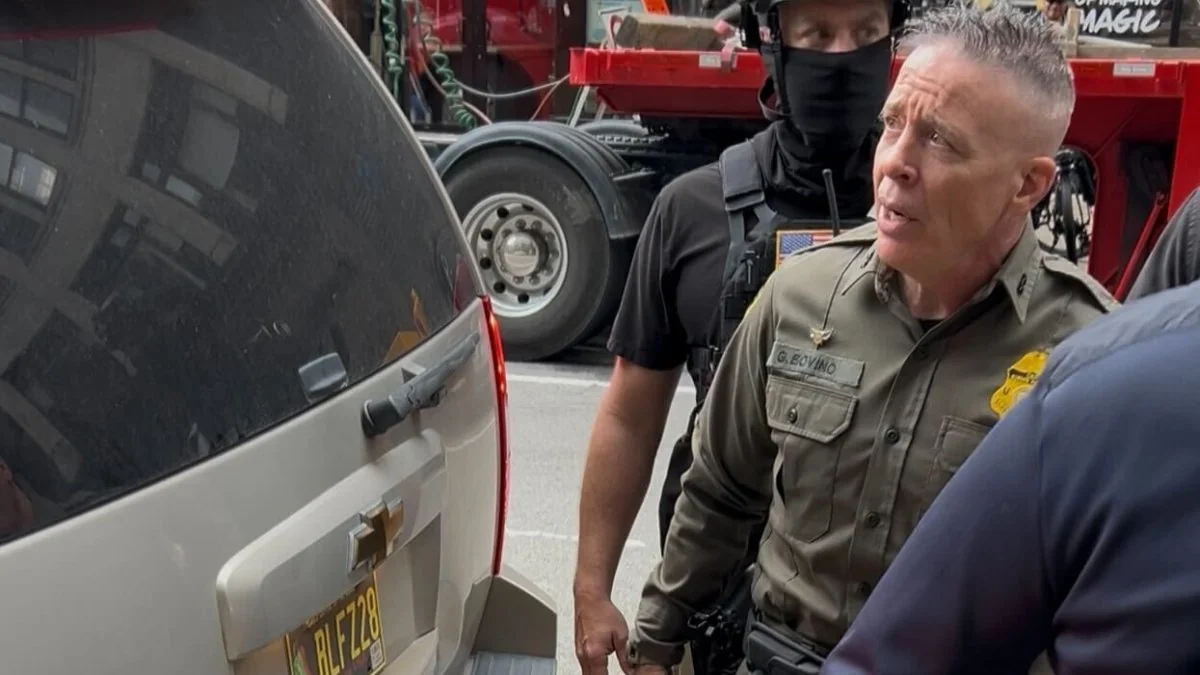
In a significant development in Chicago, a federal appeals court has temporarily blocked an order that required Border Patrol Chief Gregory Bovino to appear in court every weekday afternoon. This comes as part of a broader legal battle over the use of force during immigration enforcement operations.
Background and Context
The controversy began with a temporary restraining order issued by U.S. District Judge Sara Ellis on October 9, barring federal immigration agents from using crowd control measures like tear gas or pepper spray unless there was an immediate threat to safety. This order came in response to a lawsuit filed by protesters, clergy, and journalists alleging the use of chemical irritants violated their constitutional rights to peaceful assembly.
On Tuesday, October 28, Judge Ellis took further action when she questioned Bovino for over an hour about incidents where protesters or bystanders claimed they were tear-gassed unnecessarily. Following this, Ellis ordered Bovino to appear in court every weekday at 5:45 p.m., citing concerns that his actions could be in violation of her earlier restraining order.
Legal Challenge and Appeal
In an open court appearance on Tuesday, attorneys representing the Trump administration asked Judge Ellis to stay her requests. However, she denied their appeals. The following day, they appealed to the Seventh Circuit Court of Appeals for a stay. In a late afternoon ruling on Wednesday, the appeals court granted this request temporarily.
The appeals court’s order stated that pending a decision on the petition for a writ of mandamus, Judge Ellis’ October 28th order was stayed “only to the extent it required Gregory Bovino to appear in court, in person, each weekday at 5:45 PM.” This means that while Bovino is no longer required to attend daily, other aspects of Ellis’ ruling remain in effect.
Implications and Future Steps
The temporary stay on Judge Ellis’ order comes as a deposition for Bovino is set for Thursday. The preliminary junction hearing, where attorneys representing the protesters aim to prohibit further use of chemical agents, is scheduled for November 5th. This legal maneuver reflects the ongoing tension between immigration enforcement and civil liberties during protest situations.
Bovino himself has faced criticism and allegations that he violated Ellis’ temporary restraining order by using tear gas in Little Village last Thursday when agents were conducting more arrests.
He defended his actions, stating they were necessary due to a rock thrown at him. However, the legal challenges against both Bovino and the Trump administration are far from over.
The case highlights the complex interplay between federal law enforcement, judicial oversight, and civil rights in the context of immigration policy. As this saga unfolds, it will continue to be closely watched by legal experts, activists, and policymakers alike.