Key Highlights
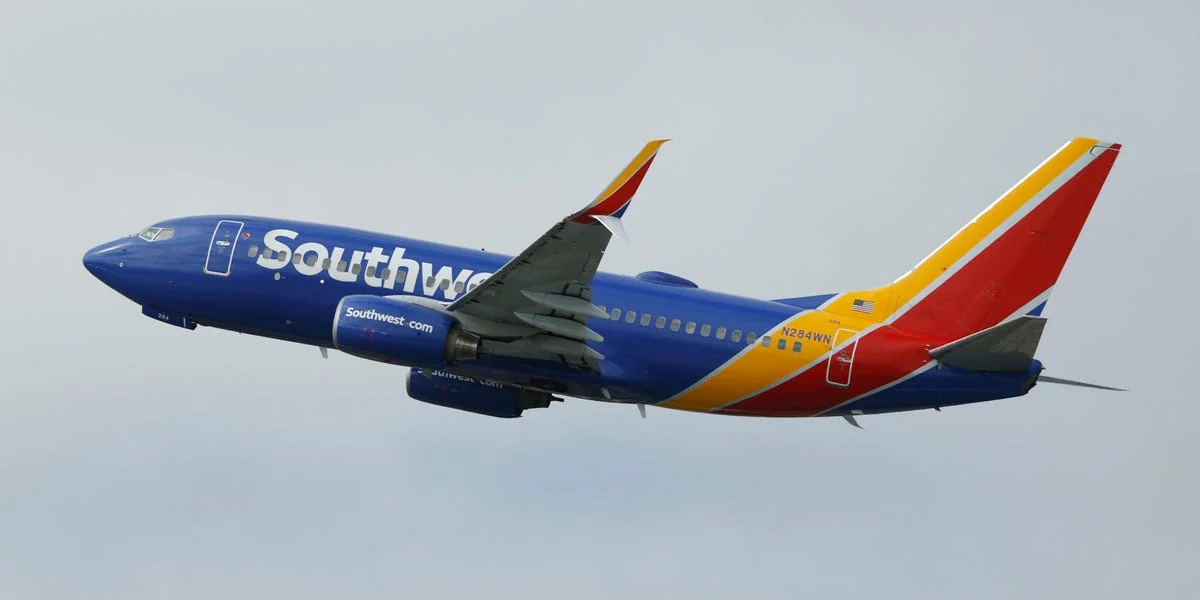
- A Southwest Airlines flight aborted its landing due to a near miss with a helicopter.
- The National Transportation Safety Board (NTSB) is investigating the incident at Cleveland Hopkins International Airport.
- The country’s air traffic control system faces challenges amid a government shutdown.
- Flight safety and operational procedures are under scrutiny as incidents like this highlight potential risks.
Incident Overview: A Near Miss Between a Plane and Helicopter
In a recent incident, Southwest Airlines Flight 1333 from Baltimore faced a critical near miss while attempting to land at Cleveland Hopkins International Airport. The close encounter with an Airbus H145 medical helicopter prompted the airline to abort its landing and perform a go-around maneuver.
Investigation Details
The National Transportation Safety Board (NTSB) is currently investigating this loss of separation incident, which occurred on Wednesday. According to FlightRadar24 data, the Boeing 737 received a Traffic Collision Avoidance System resolution advisory (TCAS RA), indicating an immediate need for evasive action.
Technical Aspects and Timeline
The Airbus H145 medical helicopter was en route to pick up a patient from a nearby hospital when it passed approximately half a mile in front of the Southwest plane at an altitude of 2,075 feet. Air traffic control tower recordings reveal that controllers instructed the helicopter pilot to pass behind the airliner to maintain safe separation.
Despite these instructions, the situation escalated as the helicopter and the Boeing 737 neared each other. An audio recording from the air traffic control tower shows a dialogue between the pilots:
“Sir, it’d be better if we go above it and in front of it, if we can?”
Following this exchange, Southwest Flight 1333 turned right to avoid collision.
The pilot then informed air traffic control that they needed to go around the airport due to receiving a TCAS RA. The plane safely circled the airport before landing.
Air Traffic Control Challenges Amid Government Shutdown
The Cleveland incident highlights ongoing challenges within the country’s air traffic control system, which is currently experiencing staffing shortages and operational disruptions due to a government shutdown. Air traffic controllers are required to report for duty despite not receiving their salaries during this period.
According to statements from the Federal Aviation Administration (FAA), staff shortages have led to increased flight delays at various airports since the shutdown began on October 1. The FAA emphasizes that resolving these issues is crucial to ensuring public safety and minimizing travel disruptions:
“The shutdown must end so that these controllers receive the pay they’ve earned and travelers can avoid further disruptions and delays.”
Industry Context and Future Implications
This incident serves as a stark reminder of the importance of maintaining robust air traffic control systems and comprehensive safety protocols in aviation. The close call between a commercial airliner and a medical helicopter underscores the potential risks associated with airspace management, particularly when resources are strained.
Industry experts argue that such incidents highlight the need for continuous improvement in communication technologies and operational procedures to prevent similar near misses from escalating into more severe situations. As air travel continues to grow, ensuring the safety of all passengers remains paramount, and addressing current staffing shortages will be critical for mitigating risks.