Key Highlights
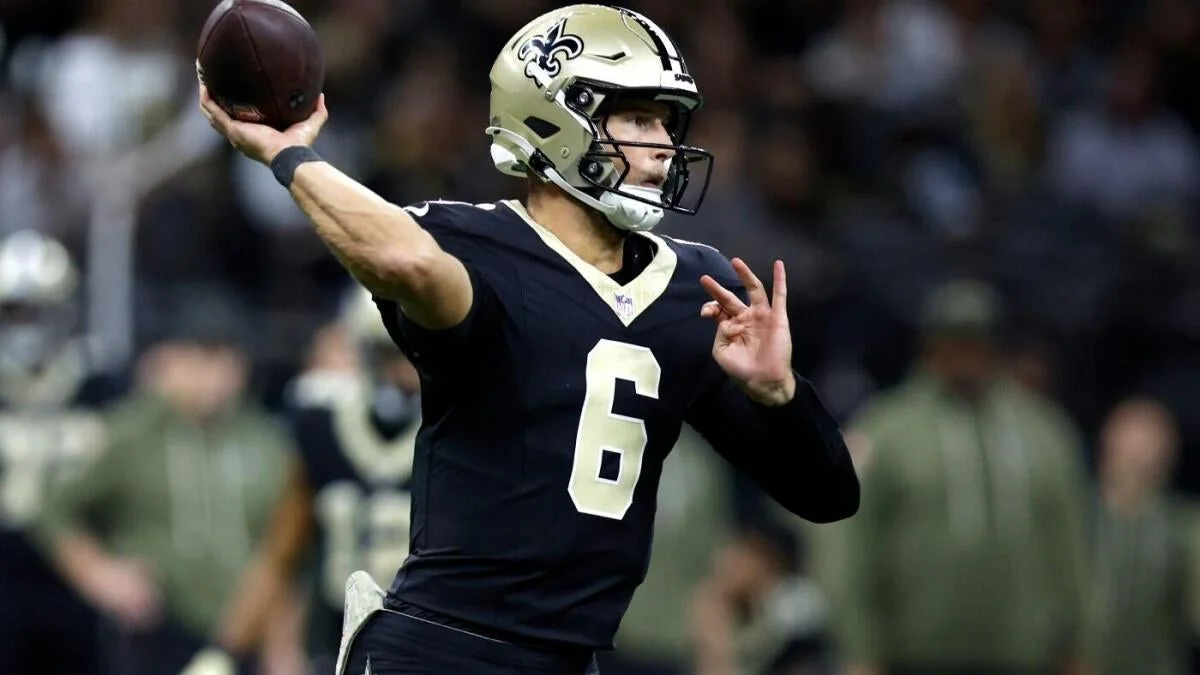
- Tyler Shough, the 40th overall pick in 2025, is set to make his first career start for the New Orleans Saints.
- The Saints’ decision to switch from Spencer Rattler to Shough was based on underwhelming performances by the starter.
- With nine games remaining, Shough must perform well to avoid being drafted over in 2026.
- Historical examples of trades down and their outcomes are discussed, emphasizing that trading for a quarterback can sometimes be more beneficial.
The Tyler Shough Situation: A Race Against Time
Tyler Shough, the 40th overall pick in the 2025 NFL Draft and the third quarterback selected after Cam Ward and Jaxson Dart, is poised to make his debut as a starter for the New Orleans Saints. This move isn’t entirely surprising; rookie quarterbacks taken in early rounds often find themselves on the field within their first year, even if they don’t start at the beginning of the season.
Spencer Rattler, the Saints’ 2024 fifth-round pick, performed well enough to keep his job for eight starts but faltered during the final two weeks. Head coach Kellen Moore ultimately decided to switch to Shough after just one series into a game against the Buccaneers on Week 8.
Shough’s Opportunity and Challenges
With only nine games left in the regular season, Shough faces the daunting task of proving his worth. The Saints travel to Los Angeles for their next matchup with a formidable Rams team boasting one of the league’s best defenses. In the context of the 2026 NFL Draft, the Saints currently hold the No. 1 overall pick by virtue of tiebreakers.
The question now is: how can Shough use this opportunity to force the organization into reevaluating their draft strategy? If he fails to significantly improve his numbers and performance over these final nine games, it may become necessary for the Saints to consider trading down or selecting a non-quarterback position with their top pick.
Historical Perspectives on Trading Down
Historically, teams that trade down have often benefited from improved roster flexibility. For instance, in 2016, the Tennessee Titans traded down from No. 9 to No. 15 and acquired picks in subsequent years, allowing them to build a strong team over time. Similarly, in 2023, the Chicago Bears used an extra first-round pick to bolster their roster with key acquisitions like Caleb Williams.
These examples illustrate that trading down can provide teams with more flexibility to address other critical needs.
However, as noted by former Titans general manager Ran Carthon on the “With the First Pick” podcast, “If something has given you pause— and it clearly has—you have to target a quarterback. Even if that means admitting you used a top-50 pick on a backup, it’s better to correct a mistake than double down on one.”
The Future of Quarterback Drafting in the NFL
Looking at the quarterbacks drafted No. 1 overall since 2011, there is significant variation in their impact. From generational talents like Cam Newton and Kyler Murray to underperformers who were nonetheless selected high. These cases underscore the complexity of quarterback drafting and the importance of making tough decisions based on current needs rather than sunk costs.
The performance of Tyler Shough over his remaining games will be crucial in determining whether he stays as the Saints’ starting quarterback or if a change is necessary for 2026. As the regular season progresses, fans and analysts alike will be watching closely to see how Shough performs and what it means for the future direction of the franchise.