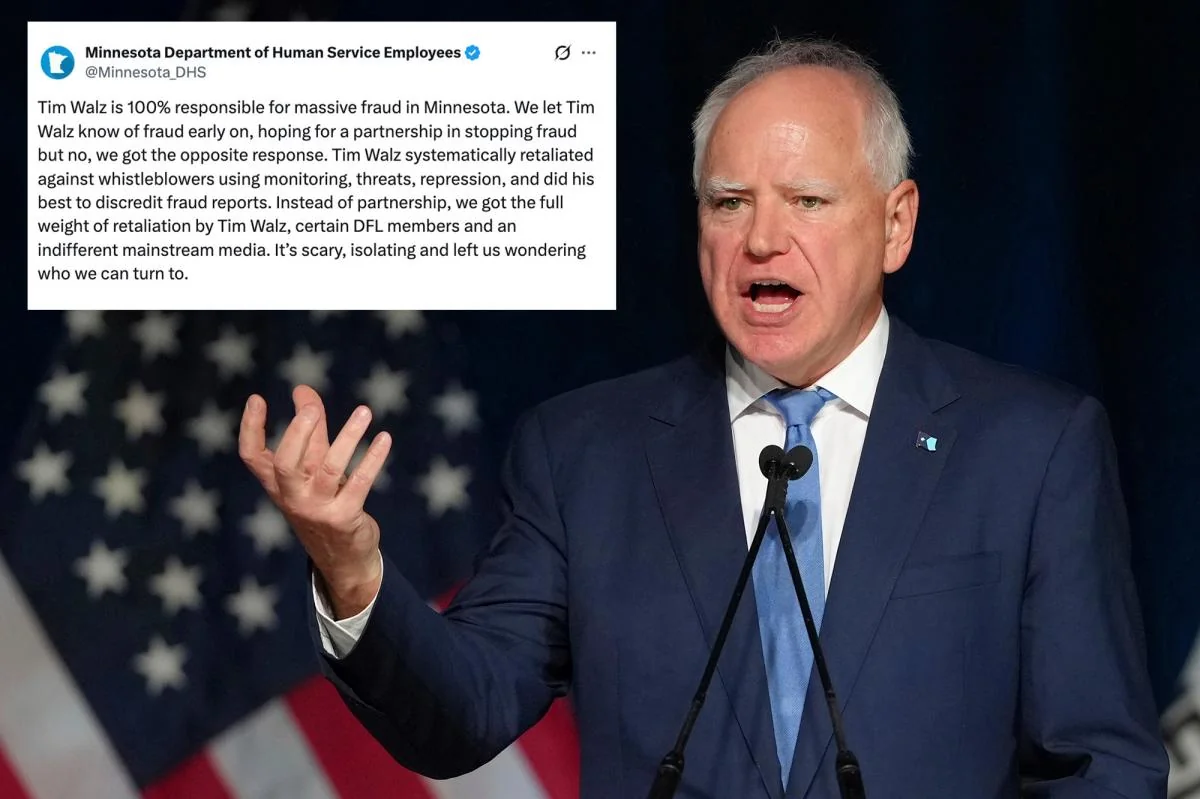
Key Highlights
- Hundreds of state workers at the Minnesota Department of Human Services accused Governor Tim Walz of allowing a “massive fraud” scandal and retaliating against whistleblowers.
- The Feeding Our Future fraud scheme involved over $1 billion in taxpayer money, with dozens of scammers involved.
- Tim Walz has faced criticism from both political opponents and President Trump for his handling of the scandal.
- Minnesota DHS employees have openly criticized Governor Tim Walz on their X account, alleging systematic retaliation against whistleblowers.
Massive Fraud Scandal Rocks Minnesota’s Social Services
In a stunning revelation, hundreds of state workers at the Minnesota Department of Human Services (DHS) have publicly lambasted Governor Tim Walz for his alleged negligence in allowing a “massive fraud” scandal to unfold under his watch. The employees, numbering over 480, took to their X account on Saturday to express their deep dissatisfaction with the governor’s handling of the crisis.
The fraud, dubbed “Feeding Our Future,” involved an alarming $1 billion in taxpayer money, siphoned off by dozens of scammers across the state. This scandal has been described as the largest known COVID-19 fraud case in the country. The scheme revolved around organizations like Feeding Our Future, which purported to help feed school children but instead used the funds for lavish personal expenses and foreign real estate projects.
Whistleblowers Accuse Tim Walz of Retaliation
The Minnesota DHS employees’ X account stated unequivocally that Governor Tim Walz is “100% responsible” for the fraud. They alleged that the governor systematically retaliated against whistleblowers, employing monitoring, threats, and repression to discredit fraud reports. The workers emphasized that their efforts to collaborate with the governor in stopping the fraud were met with opposition rather than support.
“Tim Walz is 100% responsible for massive fraud in Minnesota.
We let Tim Walz know of fraud early on, hoping for a partnership in stopping fraud but no, we got the opposite response,” one statement read. “Tim Walz systematically retaliated against whistleblowers using monitoring, threats, repression, and did his best to discredit fraud reports. Instead of partnership, we got the full weight of retaliation.”
Government Response and Public Criticism
In response to these allegations, Governor Tim Walz downplayed the fraud scandal while criticizing President Trump for exploiting it politically. During an interview on NBC News’ “Meet the Press,” Walz retorted against Trump’s accusations: “Donald Trump: Deflect, demonize, come up with no solutions. He’s not going to help fix anything on fraud.”
Walz also addressed his administration’s actions, stating that he took responsibility for putting people in jail despite federal prosecutors leading many of the charges. “I take responsibility for putting people in jail,” Walz said. “My God, there’s a big difference between fraud and corruption.
And corruption is something he knows about.”
The scandal has not only drawn national attention but also raised questions within Minnesota’s political landscape. The governor faces criticism from both his opponents and President Trump for failing to address the widespread fraud effectively.
Timeline and Impact of the Feeding Our Future Scandal
The Feeding Our Future fraud scheme began in 2016 as a nonprofit organization aimed at helping feed school children. However, it quickly turned into a massive scam, with over $1 billion in taxpayer money being diverted to personal expenses and real estate projects. The organization dissolved in 2022 under intense scrutiny from federal investigators.
Over the past five years, fraudsters targeted Minnesota’s generous social safety net by setting up companies that billed the state for services never provided.
This included dozens of local businesses partnering with Feeding Our Future and other nonprofits to submit fraudulent claims for food aid. The actual beneficiaries were foreign real estate projects and luxury cars.
“As staff, we firsthand witnessed and observed fraud happening yet we were shutdown, reassigned and told to keep quiet,” the Minnesota DHS employees’ X account alleged. “Sometimes more. Leadership did not want to appear to discriminate against certain communities and were unwilling to take action, such as stopping fraud, that would have an adverse impact on their image.”
Post-incident investigations by federal prosecutors revealed multiple raids and convictions. At least 59 people have been convicted so far, with the Justice Department continuing to prosecute individuals associated with the Feeding Our Future scheme.
Conclusion
A Crisis of Governance?
The Minnesota fraud scandal has exposed serious governance failures within the state’s social service system. The allegations against Governor Tim Walz highlight potential issues of accountability and integrity in public office. As the investigation continues, the fallout from this scandal will likely have lasting impacts on Minnesota’s political landscape.