Key Highlights
- Vice President Vance’s speech last year shocked European leaders.
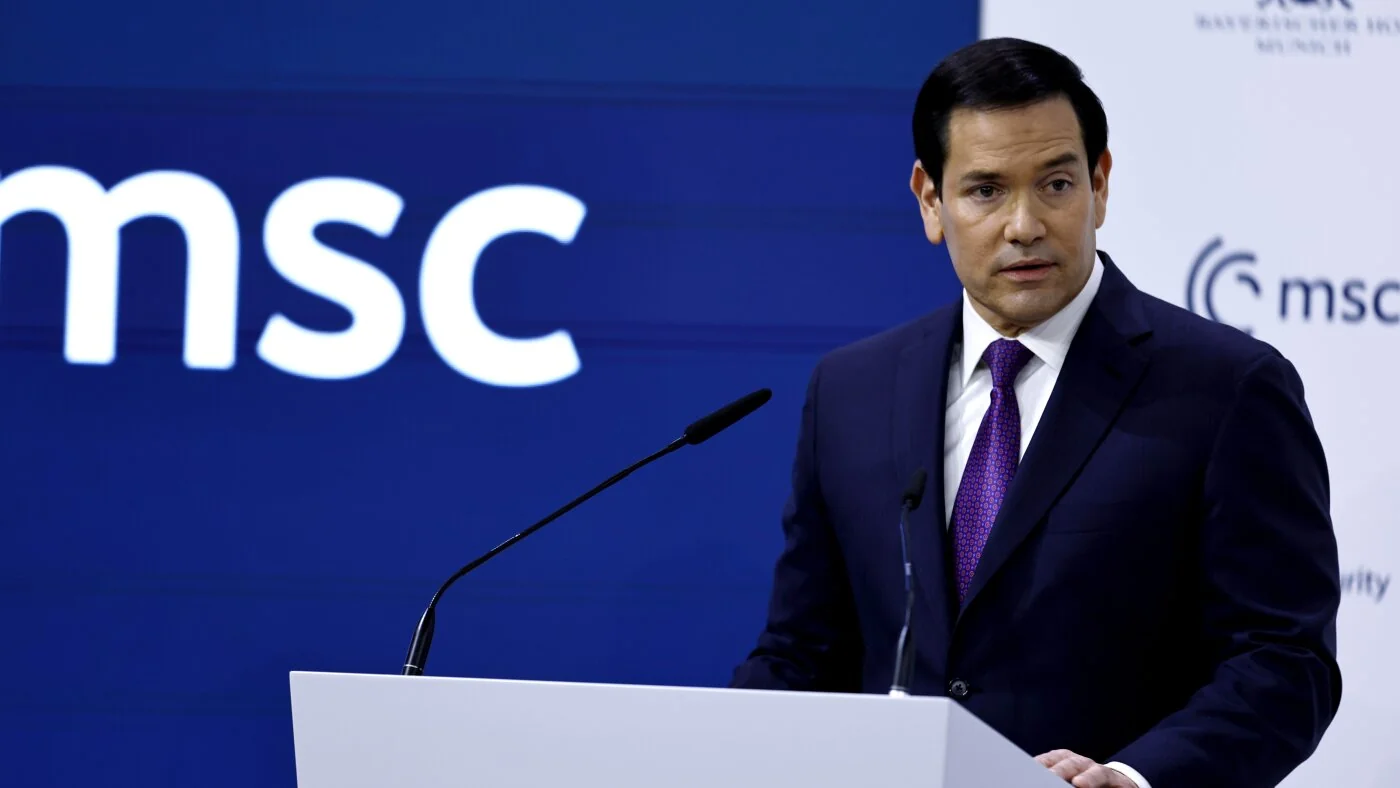
- U.S. Secretary of State Marco Rubio gave a different approach at this year’s Munich Security Conference, focusing on immigration challenges in both the U.S. and Europe.
- Germans Chancellor Friedrich Merz called for Europe to unite against big power politics.
- Kaja Kallas pushed back against the notion of “civilizational erasure” during her speech.
The U.S. and Europe at a Crossroads: Munich Security Conference Insights
After last year’s controversial lecture on free speech and democracy from Vice President Vance, the expectations for this year’s Munich Security Conference were understandably low. But in an unexpected turn of events, U.S. Secretary of State Marco Rubio delivered a keynote address that, while still provocative, was far more nuanced than many had anticipated.
Rubio’s Speech: A Call to Unity and History
Marco Rubio focused on the shared challenges of immigration between the United States and Europe, drawing parallels between the two continents. He reminisced about the historical contributions of various European groups to America’s founding, a move that seemed to bring Europeans closer together under the banner of transatlantic partnership.
Merk’s Resilient Call for Unity
However, it was German Chancellor Friedrich Merz who delivered one of the most compelling speeches. Addressing the grim outlook on an international rules-based order, he bluntly stated that “this order, as flawed as it has been in its heyday, no longer exists.” Merz’s criticism of the bullying nature of ‘big power politics’ under the Trump administration resonated deeply with European leaders who are acutely aware of their vulnerabilities.
The Pushback: Kallas on Civilizational Erasure
European Union foreign policy chief Kaja Kallas, one of few to resist the applause following Rubio’s speech, took a firm stance. She argued against the notion that Europe was facing ‘civilizational erasure,’ emphasizing the resilience and strength of European societies.
The Munich Security Conference: A Reflection on Global Order
While the speeches at this year’s conference underscored the ongoing challenges between the United States and Europe, they also highlighted a growing consensus among European leaders. The need to unite against external pressures is becoming more urgent than ever before.
As Europe moves forward, it faces an uphill battle in maintaining its identity while also ensuring security and prosperity. The Munich Security Conference serves as a critical forum for these discussions, providing a platform where the future of transatlantic relations can be shaped.
You might think this is new, but the dynamics between the U.S. and Europe have been evolving for decades. This year’s conference merely brought to light the tensions that have always existed beneath the surface of a seemingly stable alliance.