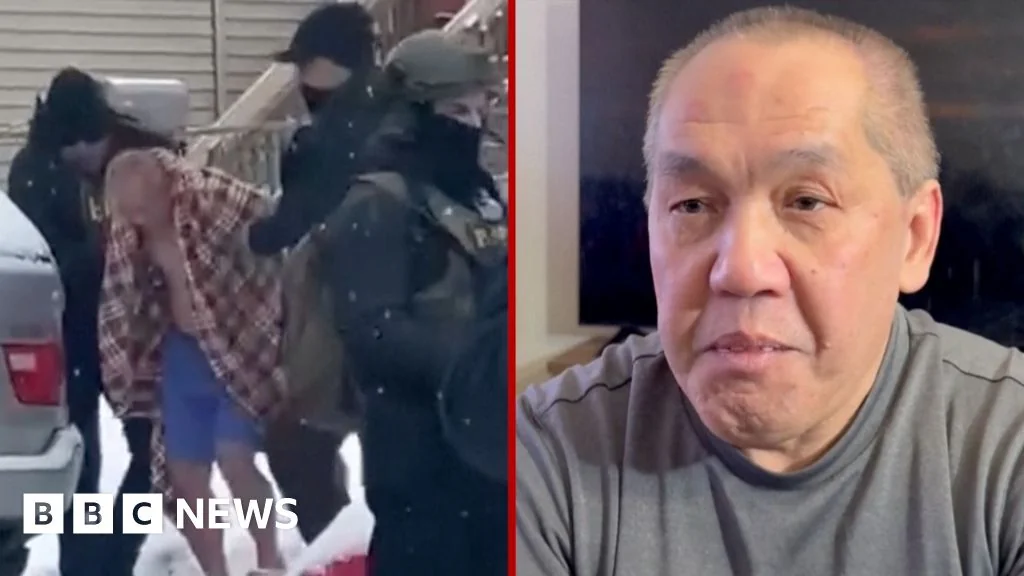
- US citizen ChongLy Thao was detained by ICE in his underwear during a federal immigration raid.
- The incident sparked controversy and raised concerns about immigrant rights.
- Minnesota officials have filed a lawsuit against the Department of Homeland Security over ongoing immigration crackdowns.
- The Trump administration argues for broad constitutional authority to enforce national immigration laws.
Detention Incident Raises Concerns About Immigrant Rights
A federal immigration raid in Minnesota recently went viral, drawing attention to the harsh realities faced by US citizens during enforcement actions. ChongLy Thao, a 56-year-old man, was detained at gunpoint in his home and subsequently led onto the street wearing only his underwear, an incident that occurred in subfreezing conditions.
Incident Details
The Department of Homeland Security (DHS) stated that officers were searching for two convicted sex offenders at Thao’s address. During the raid, a US citizen residing there refused to be fingerprinted or facially identified and was consequently detained by ICE agents.
“Thao’s family categorically disputes this account,” a statement from his relatives emphasized. “They strongly object to DHS’s attempt to publicly justify this conduct with false and misleading claims.”
Minnesota Lawsuit Challenges Immigration Crackdown
In response to the ongoing immigration crackdown, Minnesota officials have filed a lawsuit against the Department of Homeland Security. The lawsuit aims to curb the agency’s actions, citing over 3,000 arrests in just six weeks.
The case highlights the tension between federal immigration policies and state-level concerns for the well-being of residents. According to the lawsuit, the current enforcement practices are not only unconstitutional but also detrimental to public safety and community relations.
Broader Context
The Trump administration has defended its approach by asserting that the Constitution grants it broad authority to enforce national immigration laws as it sees fit. However, critics argue that such measures can lead to arbitrary detentions and human rights violations.
“Diplomatic channels are the way to go,” said a spokesperson from Minnesota, emphasizing the need for dialogue and legal challenges against what they perceive as overreach by federal agencies.
Expert Analysis and Future Implications
The incident involving ChongLy Thao has brought renewed attention to the intersection of immigration policy and individual rights. Legal experts suggest that the case may set a precedent for future challenges to similar enforcement actions, potentially influencing the broader discourse on immigrant rights in the United States.
As the debate continues, it remains to be seen how federal agencies will balance their enforcement priorities with public safety concerns and respect for constitutional protections.
The Minnesota lawsuit is just one of several legal battles emerging from the current wave of immigration crackdowns. It underscores the complex and evolving landscape of US immigration policy and its impact on both individuals and communities.