Key Highlights
- The Golden State Warriors must accept that Draymond Green is not the player he used to be.
- Green’s offensive production has declined significantly, with his 3-point shooting and free-throw line visits down.
- The team’s defensive efficiency remains high despite Green’s struggles on offense.
- Kerr should consider giving Green more rest as they look towards the playoffs.
Draymond Green: The New Reality for the Golden State Warriors
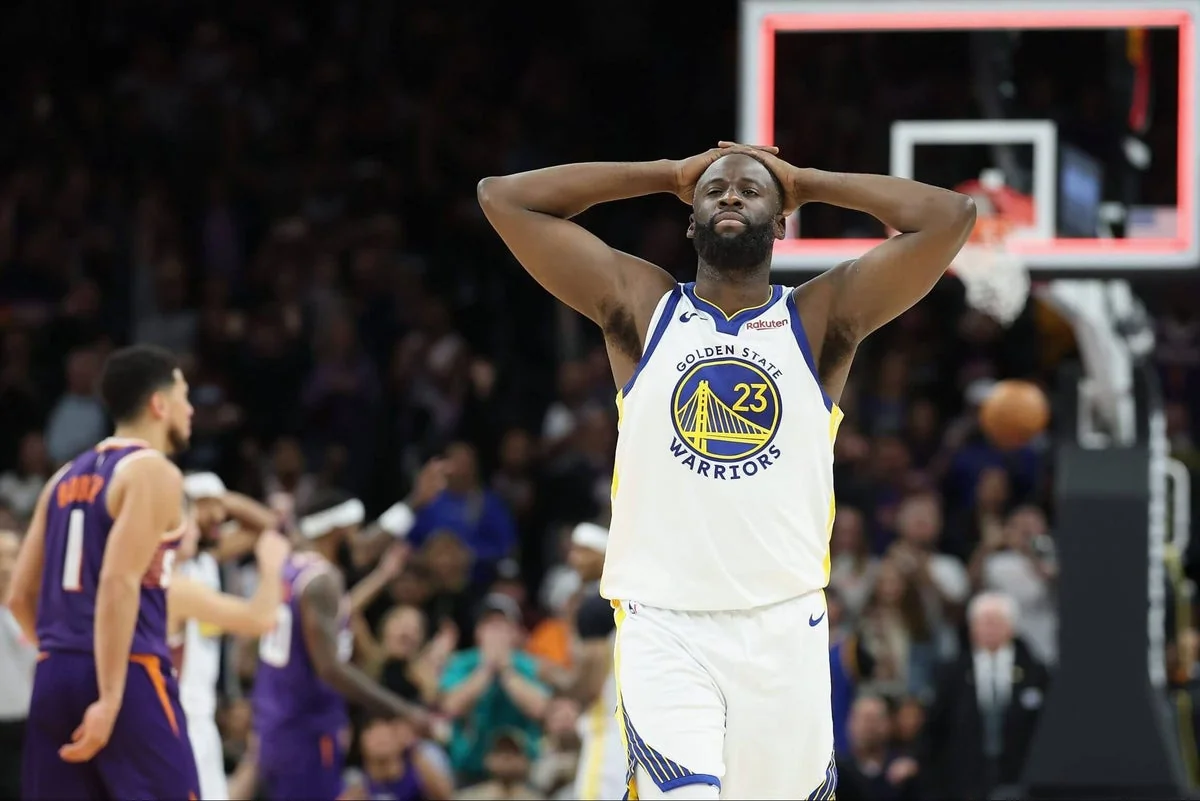
In recent weeks, the Golden State Warriors have faced a challenge that goes beyond just their latest outburst in a game against the Orlando Magic. Coach Steve Kerr and star guard Stephen Curry made it clear that the team would move past another episode of Draymond Green’s emotional volatility quickly. However, what remains critical is how they accept the new reality: Green’s skills are not as consistent or sharp as they once were.
The Diminished Player
Draymond Green has always been a multifaceted player for the Warriors, excelling on both ends of the court. However, his offensive production this season has seen a significant drop. According to Basketball-Reference.com, roughly 59.1 percent of Green’s field goal attempts are now 3-pointers, compared to just 36.8 percent over his first 13 seasons.
His shooting from beyond the arc is currently at 32.7 percent for the season, which is in line with his career average but still alarming given that teams are giving him more space on the perimeter.
More concerning is Green’s involvement in the offensive end of the court. He is only getting to the free-throw line on 14.8 percent of his possessions, which is on track for the lowest rate of his career. This season, he is averaging 8.1 points per game, marking his lowest average since the 2021-22 season when he was a key member of their championship-winning team.
Offensive Hindrance
The decrease in Green’s offensive production has made him more of an offensive hindrance than help. The Warriors have adjusted their style to compensate, playing a more cautious and defensive-minded game as they try to make up for his reduced output on the offensive end. According to NBA.com, the team ranks third in defensive rating but only 21st in offensive rating.
Despite these challenges, Green still provides immense value defensively.
His ability to hold opposing All-Star players like Victor Wembanyama and Alperen Şengün to poor shooting percentages remains a critical asset for the Warriors. Coach Steve Kerr has emphasized how important Green is in setting up the offense through pick-and-rolls and dribble handoffs, creating trust among his teammates that he can clean up their mistakes on defense.
A Conservatory Approach
Given the offensive decline and his lingering foot issues, it’s clear that Kerr must be more cautious with Green’s minutes. The Warriors have already cut down his playing time to 27 minutes per game, which is the lowest total since he was a second-year player in 2013-14.
While Kerr and Curry see value in keeping Green on the court for its defensive benefits, there’s also an acknowledgment that his current production may not be sustainable. The hope is to find a balance where they can keep him engaged enough to bring out his best while minimizing his negative impact on offense.
This could mean rotating players more frequently or even considering more rest periods as they look towards the playoffs.
The challenge for the Warriors now lies in addressing the real issue: Green’s decision to leave the bench and disengage from his teammates during games isn’t the primary problem. The real obstacle is that he has become an offensive burden, which the team must navigate carefully as the regular season progresses into its critical stages.