Key Highlights
- Sundar Pichai warns of “irrationality” in the current AI boom.
- No company will be immune if the AI bubble were to burst, including Google’s parent firm Alphabet.
- Alphabet shares have doubled in value over seven months, reaching $3.5 trillion.
- Google is investing £5 billion in UK artificial intelligence infrastructure and research over two years.
The AI Boom: A Moment of Both Rationality and Irrationality
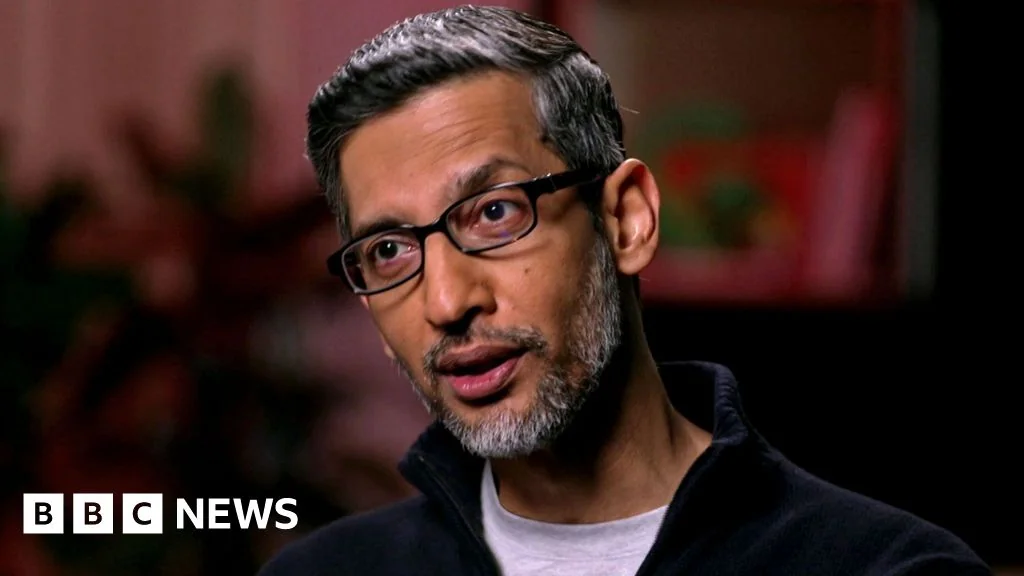
Alphabet CEO Sundar Pichai has sounded a note of caution during an exclusive interview with BBC News, warning that the current artificial intelligence (AI) investment boom contains “elements of irrationality.” Pichai’s comments come at a time when AI companies are experiencing unprecedented growth and valuations, spurring concerns about a potential bubble similar to the dotcom era.
Market Scrutiny Intensifies
The scrutiny on the state of the AI market has never been more intense. As Alphabet shares have doubled in value over seven months, reaching $3.5 trillion, many are questioning whether the rapid growth is sustainable. Pichai acknowledged that while the growth of AI investment is an “extraordinary moment,” there may be some irrational exuberance.
Google’s Position
Despite the potential risks, Pichai stated that Google would not be immune to the impact of a bursting AI bubble. However, he believes the company is better positioned than others due to its “full stack” model, which includes proprietary chips and other technologies. “I think no company is going to be immune, including us,” said Pichai.
Energy Considerations
The expansion of AI also raises significant energy concerns. According to the International Energy Agency, AI already accounts for 1.5% of global electricity consumption. Pichai emphasized the need for action on developing new sources of energy and scaling up energy infrastructure to avoid constraining economic growth.
Focusing on UK Investment
Google is also expanding its footprint in the United Kingdom, committing £5 billion over two years to support artificial intelligence research. This investment includes deepening work at DeepMind, a key AI unit based in London. Pichai expressed commitment to significant UK investments, seeing potential for the country to become one of the world’s top three AI superpowers.
AI and Jobs
The impact of AI on jobs is another focus. Pichai highlighted that while AI will transform certain professions, it will also create new opportunities. He advised workers to adapt by learning how to use these tools effectively, noting that those who do so will thrive in their roles.
As the technology continues to evolve rapidly, the industry must navigate both its potential and its challenges carefully. Pichai’s warnings reflect a cautious optimism about AI’s future, urging all players, including Google, to remain vigilant and prepared for any shifts in market conditions.