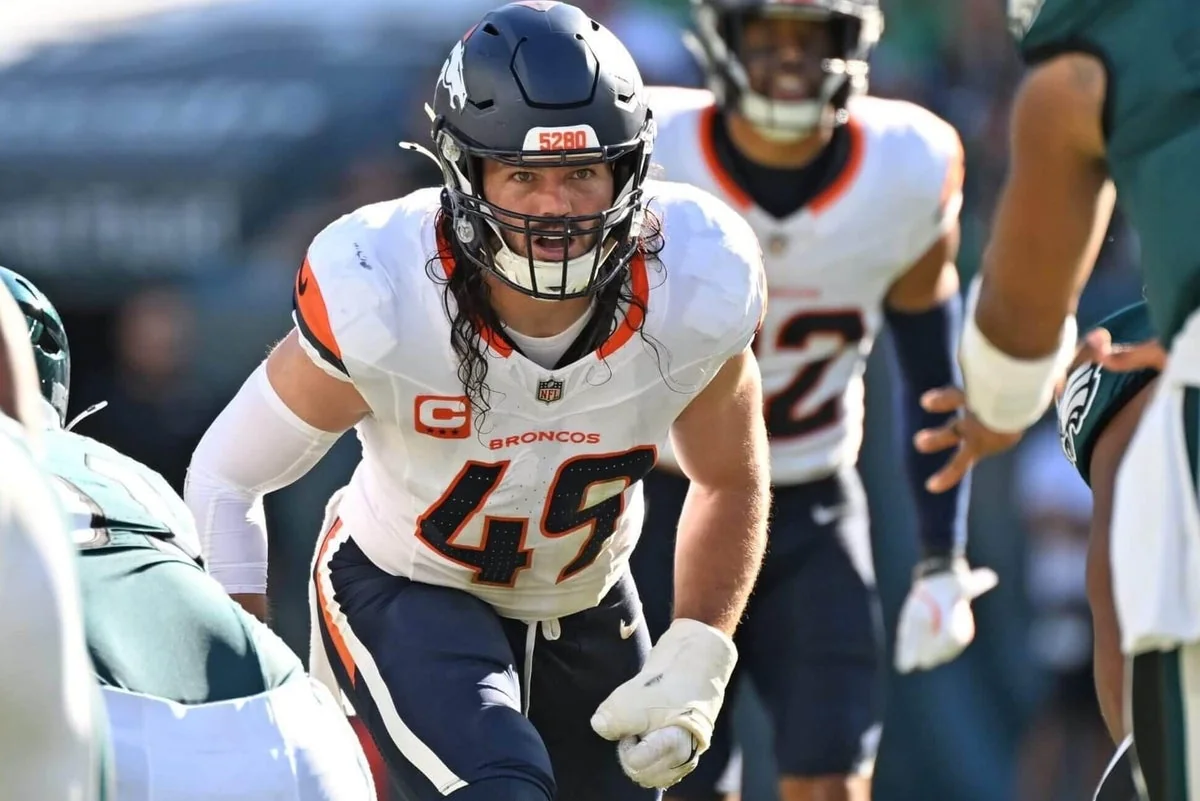
Key Highlights
- Alex Singleton, a 31-year-old linebacker for the Denver Broncos, successfully had surgery to remove a cancerous tumor.
- The surgery was performed on Friday after Singleton was diagnosed with testicular cancer following a drug testing program.
- Singletom expects to return to the field in the coming weeks despite his recent diagnosis and operation.
- Singleton believes that the cancer was caught early, providing a positive prognosis for him and his family.
Alex Singleton Diagnosed with Testicular Cancer
The Denver Broncos have announced that linebacker Alex Singleton has been diagnosed with testicular cancer. The 31-year-old player was randomly selected by the NFL to undergo a drug testing program, where he discovered elevated levels of the hormone hCG in his system.
Diagnosis and Treatment
“After speaking with my agent and wife, we decided to book an appointment with a urologist,” Singleton stated. “We found out one week ago that I had signs of testicular cancer, and an ultrasound confirmed the diagnosis three days before our game against the Raiders.”
Impact on Broncos’ Lineup
Singletom’s diagnosis comes at a critical time for the Denver Broncos as they prepare for upcoming games. In their recent match against the Raiders, Singleton played all 60 snaps despite his health concerns.
Return to Form and Player Resilience
“While we are still awaiting some additional test results, I fully expect to return to the field in the coming weeks,” Singleton said in a social media post. “Our No. 1 priority is Alex’s health and well-being,” the Broncos stated in a team statement.
Team officials have expressed their support for Singleton as he navigates his recovery process. Coach Vic Fangio, head coach of the Denver Broncos, emphasized the team’s commitment to Singleton’s health and quick return to play.
Expert Perspectives on Athlete Health
“This is a significant challenge for any athlete,” said Dr. Michael Hemenway, a sports medicine specialist at the University of Colorado School of Medicine. “However, early detection often leads to better outcomes and recovery times.”
Hemenway noted that Singleton’s immediate return to full practice after surgery could be due in part to his rigorous training regimen and overall fitness level as an NFL player.
Future Implications for Athlete Health Care
The case of Alex Singleton highlights the importance of thorough medical screening processes within professional sports. The NFL has implemented strict testing protocols to ensure player safety, but individual cases like Singleton’s underscore the need for continuous improvement in health care practices.
“We must prioritize not just performance but also long-term health,” said Dr. Hemenway. “The early detection and treatment of issues such as testicular cancer can significantly impact a player’s future in the sport.”