Key Highlights
- The Campbell River area shoreline is now a safer haven for marine life.
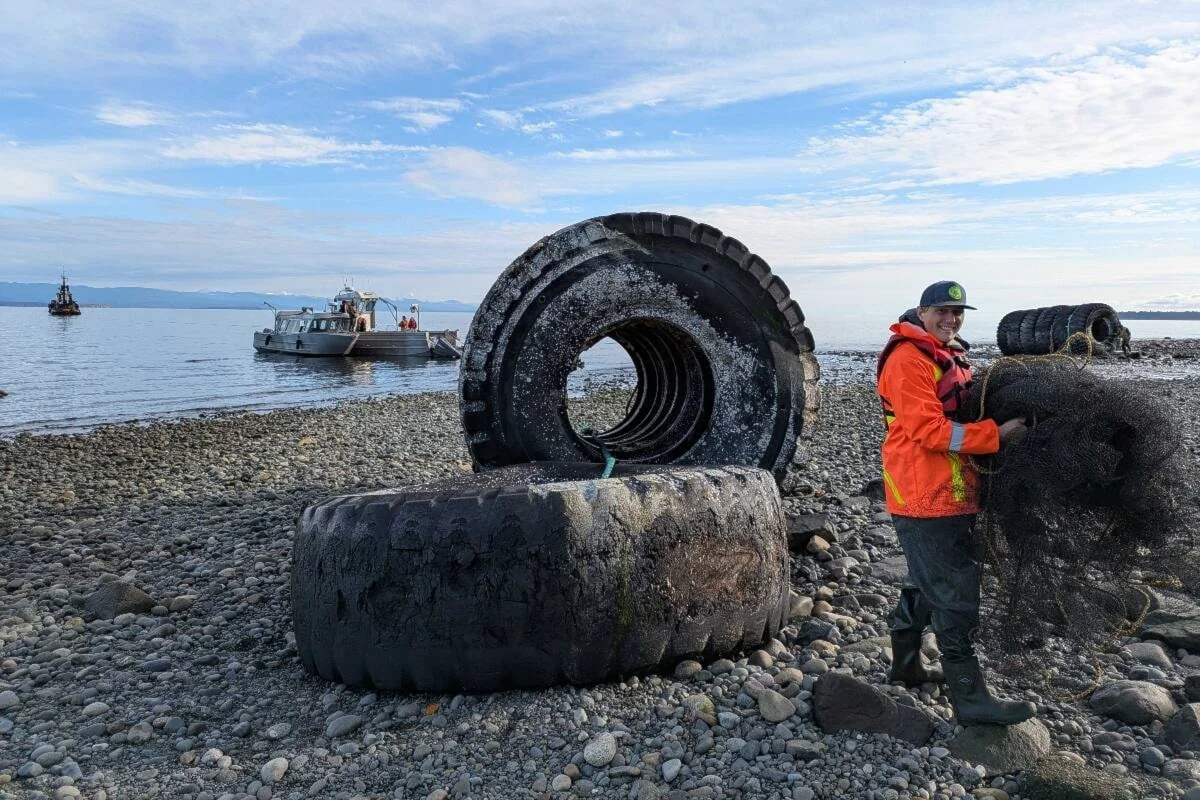
- A coalition of local environmental organizations and businesses came together to remove 11 industrial tires that had washed ashore near Shelter Bay in recent weeks on Monday, November 3.
- Styrofoam from the tires was spilling onto the beach, threatening marine animals.
- The next step will be transporting the tires to the landfill with help from several local businesses.
A Community Effort to Clean Up Marine Debris
On Monday, November 3, a coalition of local environmental organizations and businesses came together to remove 11 industrial tires that had washed ashore near Shelter Bay in recent weeks. Each tire weighed roughly four tons and was filled with styrofoam used to help with floating. In the wind, rain, and waves, the styrofoam had been breaking up and spilling onto the shoreline, posing a significant threat to marine life.
Coordinated Cleanup Efforts
The cleanup effort involved Greenways Land Trust, Coast Island Marine Ltd., and A-Tlegay Fisheries Society. Greenways Land Trust coordinated 27 volunteers who helped haul 430 kilograms of styrofoam and other debris from the beach, later transporting it to the landfill in Cumberland.
On Monday, collaborating with Greenways, Coast Island Marine Ltd. took care of tugboat duties, pulling the tires from the beach to a marine terminal. The tires were then lifted out of the water using a crane and loaded onto trucks for disposal. A-Tlegay Fisheries Society also contributed by providing two more boats that collected styrofoam and debris as the tires were hauled away.
Community Support and Future Plans
“We were so happy to see such strong community engagement and support for this effort,” said Camille Andrews, Greenways’ habitat management coordinator. The next step will be transporting the tires to the landfill with help from several local businesses. Greenways is also working with the City of Campbell River and Fisheries and Oceans Canada to establish a new marine debris removal response plan and team.
Andrews noted that this initiative aims to enable organizations to react efficiently and effectively to future incidents involving marine debris. The cleanup effort reflects the community’s commitment to protecting local marine life from industrial waste, ensuring safer habitats for wildlife in the area.
Rising Concern of Industrial Waste
The incident highlights a growing concern about large industrial waste washing ashore on Vancouver Island beaches. In August, three industrial tires washed ashore around Shelter Point Beach and were removed using heavy equipment at a cost of $6,000 to the Campbell River Salmon Foundation.
Foundation president Phil Griffith cautioned that this is likely not an isolated incident and warned that large industrial waste washing ashore is becoming increasingly common. “It’s going to happen with all the boats, docks, and what-have-you in the Strait of Georgia,” he said. Griffith emphasized the importance of having a strategy in place for cleanup efforts.
The incident underscores the ongoing challenge of managing marine debris, particularly from industrial sources, and highlights the need for coordinated community responses and strategic planning to address these environmental threats effectively.