Key Highlights
- Two U.S. Navy aircraft, an MH-60R Sea Hawk helicopter and an F/A-18F Super Hornet fighter jet, crashed during separate “routine operations” in the South China Sea on Sunday.
- All five crew members were rescued and are reported to be in stable condition.
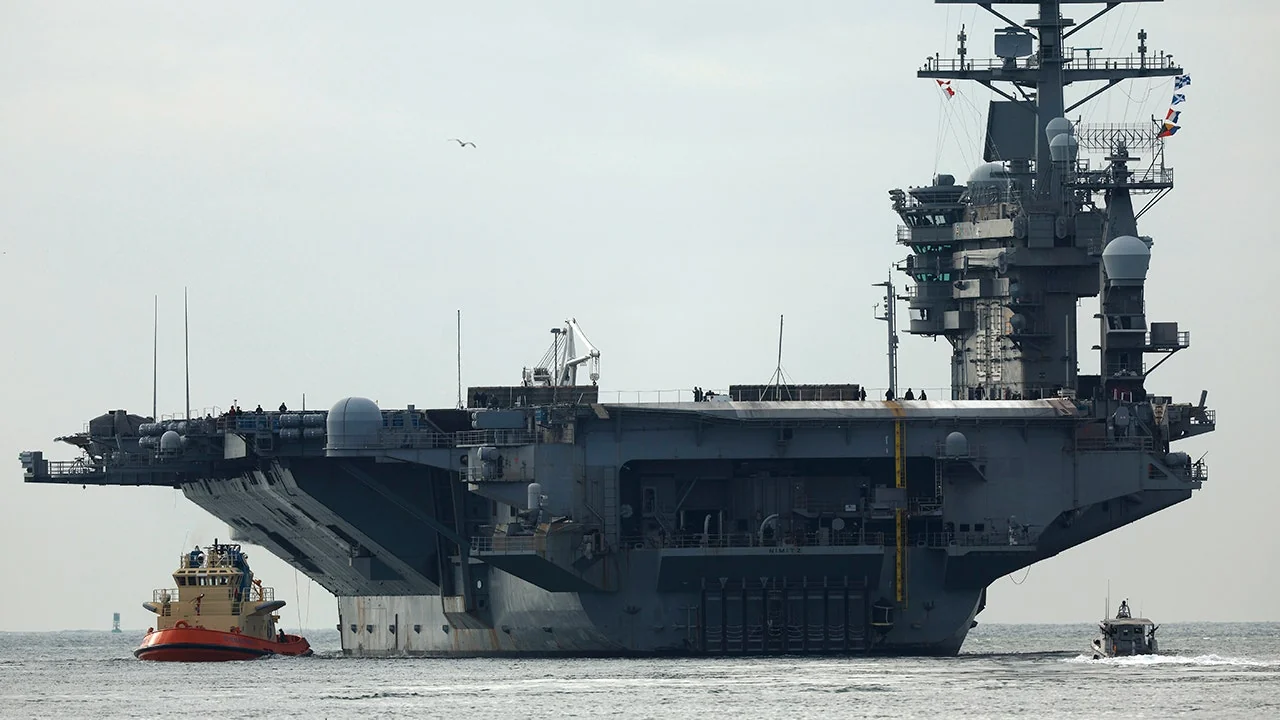
- The incidents occurred as the USS Nimitz aircraft carrier strike group and 13th Marine Expeditionary Unit conducted operations in the region.
- The cause of both crashes remains under investigation by the U.S. Navy.
Crashes During Routine Operations
The U.S. Navy experienced two separate aircraft incidents on Sunday, with both accidents occurring during routine operations in the South China Sea. The first incident involved an MH-60R Sea Hawk helicopter from the USS Nimitz (CVN 68) carrier strike group.
According to a statement by the U.S.
Pacific Fleet, around 2:54 p.m. local time on Sunday, the Sea Hawk helicopter, assigned to the “Battle Cats” of Helicopter Maritime Strike Squadron 73, crashed while conducting routine operations from the aircraft carrier. Prompt search-and-rescue efforts were launched by Carrier Strike Group 11, and all three crew members were safely recovered from the water. They were transported back to the USS Nimitz for medical evaluation and are currently in stable condition.
Swift Response and Recovery
About 30 minutes after the helicopter incident, a second crash occurred involving an F/A-18F Super Hornet fighter jet from the same aircraft carrier. The Super Hornet, assigned to the “Fighting Redcocks” of Strike Fighter Squadron 22, went down in the South China Sea during flight operations. In this case as well, search-and-rescue teams responded swiftly and recovered both crew members who had ejected safely before the aircraft hit the water.
Both aviators were transported back to the USS Nimitz and are also reported to be in stable condition.
The U.S. Navy has not yet released additional details about weather conditions or possible mechanical issues that may have contributed to these incidents. The cause of both crashes remains under investigation, with operations aboard the USS Nimitz continuing as usual while the carrier undertakes its final deployment in the Indo-Pacific region.
Background and Context
The USS Nimitz, one of the oldest active aircraft carriers in the U.S. fleet, is serving as the centerpiece of Carrier Strike Group 11. The group has been conducting freedom-of-navigation and maritime security operations in the South China Sea, an area that has become increasingly contested amid rising tensions between the United States and China.
These incidents come during a period when President Donald Trump was visiting Asia, spending Sunday night in Malaysia before departing for Japan on Monday. The crashes highlight ongoing challenges faced by U.S. forces operating in this strategically important region. As operations continue aboard the USS Nimitz, investigators will work to determine what led to these mishaps and ensure the safety of all service members involved.
The Navy’s focus remains on maintaining readiness and conducting necessary training exercises while addressing any issues that may arise during such critical missions.