Key Highlights
- Shots were reportedly fired outside the Coast Guard Station in Alameda during a protest.
- San Francisco Mayor Daniel Lurie announced that President Trump has called off plans for federal agents to be deployed to the city.
- Protests and demonstrations continued in San Francisco and Oakland, with activists voicing opposition to immigration enforcement.
- The operation being called off is seen as a victory by some but raises concerns about ongoing federal immigration actions.
Protesters Clash with Federal Agents at Coast Guard Station
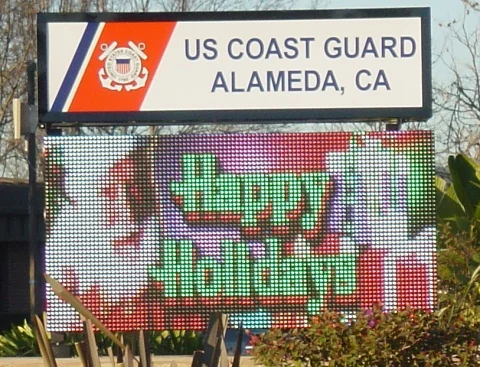
In the early hours of Thursday, federal agents arrived at the Coast Guard Station in Alameda amidst heightened tensions and protests. The deployment of these agents had been a topic of debate and anticipation for several days. According to initial reports, a box truck approached the entrance of the bridge leading to the island, prompting Coast Guard security forces to open fire.
The California Highway Patrol confirmed there was an incident at the entrance to the station but noted no one was injured.
The arrival of federal agents was met with significant opposition from protesters, who had been anticipating a more aggressive show of force from the government. Dozens of CHP officers in riot gear were deployed to disperse a crowd that was attempting to block the convoy’s entry. Two people were detained during the confrontation, and two protesters suffered injuries; one man’s foot was run over, while another was injured by a flash bang. Local activists emphasized their commitment to resistance against federal immigration enforcement.
President Trump Calls Off Federal Deployment in San Francisco
San Francisco Mayor Daniel Lurie announced that President Donald Trump had personally informed him of his decision to cancel the planned surge of federal agents into the city. This announcement came as a relief to many, who had been on edge following the president’s earlier threats and discussions about deploying National Guard troops.
“I was told that this surge was being called off,” said Mayor Lurie. “He only spoke about San Francisco prior so all I can say is what he told me.” The mayor attributed the decision to progress in addressing homelessness and crime within the city, emphasizing his office’s openness to cooperation on issues such as combating drug crises.
Despite the pullback, some community leaders expressed skepticism. Pastor Jorge Bautista of the United Church of Christ in Oakland stated, “The president is using the federal government against our own people. We need to make clear, we won’t stand for it.” Drew Paton from the First Presbyterian Church of Berkeley echoed this sentiment, adding that they will continue to resist any federal actions deemed unconstitutional.
Local Cities Unite Against Federal Immigration Enforcement
In response to the deployment of federal agents in the Bay Area, Mayor Libby Schaaf of Oakland issued a strong statement against any federal immigration enforcement within city limits. “The federal administration has escalated its rhetoric and enforcement posture,” she said. “We know that border patrol agents are being stationed on Coast Guard Island. But let me be clear – our city is fully prepared.” The mayor emphasized that Oakland remains committed to supporting immigrants and refugees, stating that the police department would not assist with immigration and customs enforcement.
Mayor Schaaf’s stance aligns with growing opposition across multiple cities in the Bay Area. These actions reflect a broader trend of local governments asserting their independence from federal policies they perceive as harmful or unconstitutional.
The decision to call off the operation is seen by some as a victory for these local leaders and community activists, but it also highlights ongoing tensions between federal authorities and those seeking to protect immigrants’ rights.
The events in San Francisco and Oakland serve as a reminder of the complex interplay between local governance and national policy. As immigration enforcement continues to be a contentious issue, the Bay Area stands at the forefront of this debate, with both victories and challenges ahead for those on all sides of the argument.